ARTIST JOURNAL
How to sell art prints in Australia without holding stock

If you've ever stacked twenty tubes of prints under a desk and hoped the right size would sell first, you already know the problem with holding stock. Money sits in paper. Space disappears. And the one size a collector wants is always the one you didn't print. This guide walks through how Australian artists sell prints without pre-printing anything, what actually happens behind the scenes, and the decisions worth making before your first order.
What "without holding stock" really means
Selling without stock means you sell the print first and have it made second. The collector pays you, you place the production order, and the finished piece is made and sent. You never hold inventory, never guess at sizes and never write off a stack of prints when a design stops selling.
It sounds simple because it is, but it only works if the production side is dependable. You need a printer who makes exactly what you listed, every time, within a timeframe you can promise, and who will send the piece directly to your collector when you ask. That is the service Print Punch is built around, and the how it works page lays out the sequence from file to finished piece.
There are two ways to run it:
- Order to your own studio. You place each order as it comes in, we make it and send it to you, and you handle the final hand to your collector. Good for markets, local pick up and artists who like to inspect every piece.
- White-label delivery to your collector. We make the piece and send it straight to the buyer under your brand, so they receive your art, not ours. The full rules are on the white-label art dropshipping page, and the guide to how a white-label order travels goes deeper.
Most artists start with the first option for a few orders, then move to the second once they trust the result.
Step one: decide what you're selling
Before you think about printers, decide the formats your collection will offer. Each one changes the price, the packing and the way the artwork reads on a wall.
- Unframed fine art prints are the lightest and lowest cost entry point. Collectors frame them locally. Print Punch prints them on 230gsm Fine Art Paper or 240gsm Textured Cotton Rag Paper, with an optional even 5cm white border. See the unframed fine art prints product.
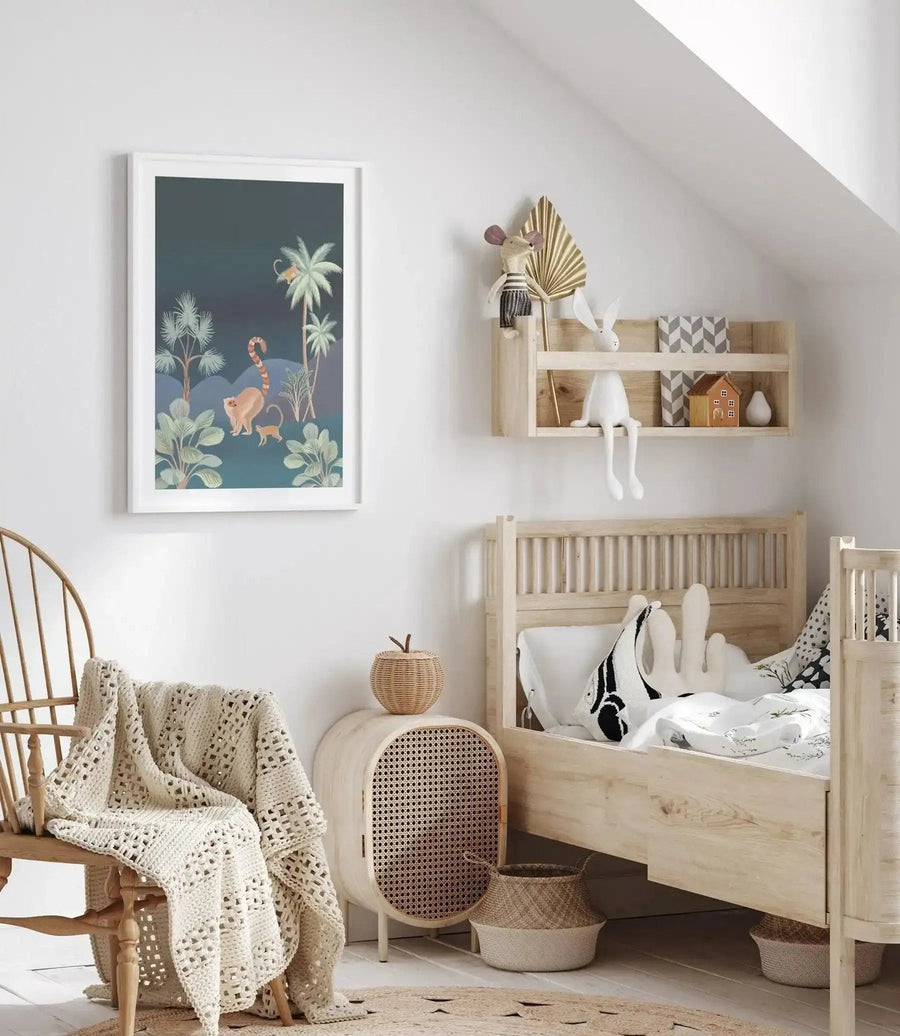
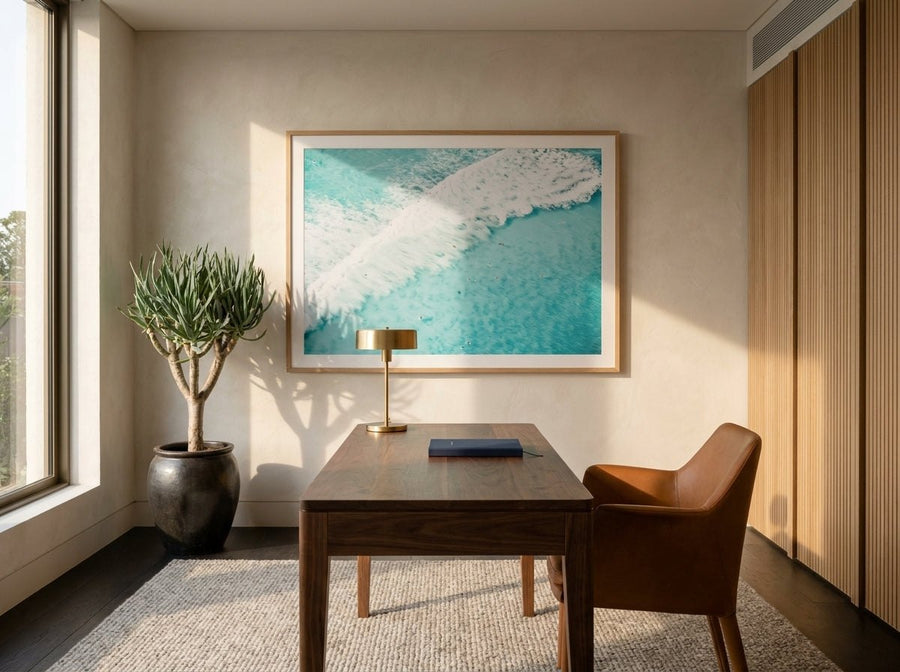
- Framed paper prints arrive finished: fine art paper behind a clear acrylic face, in an Oak veneer, Australian Raw Oak, White or Black frame. They cost more to make and ship, and they sell at a higher price. See framed paper prints.
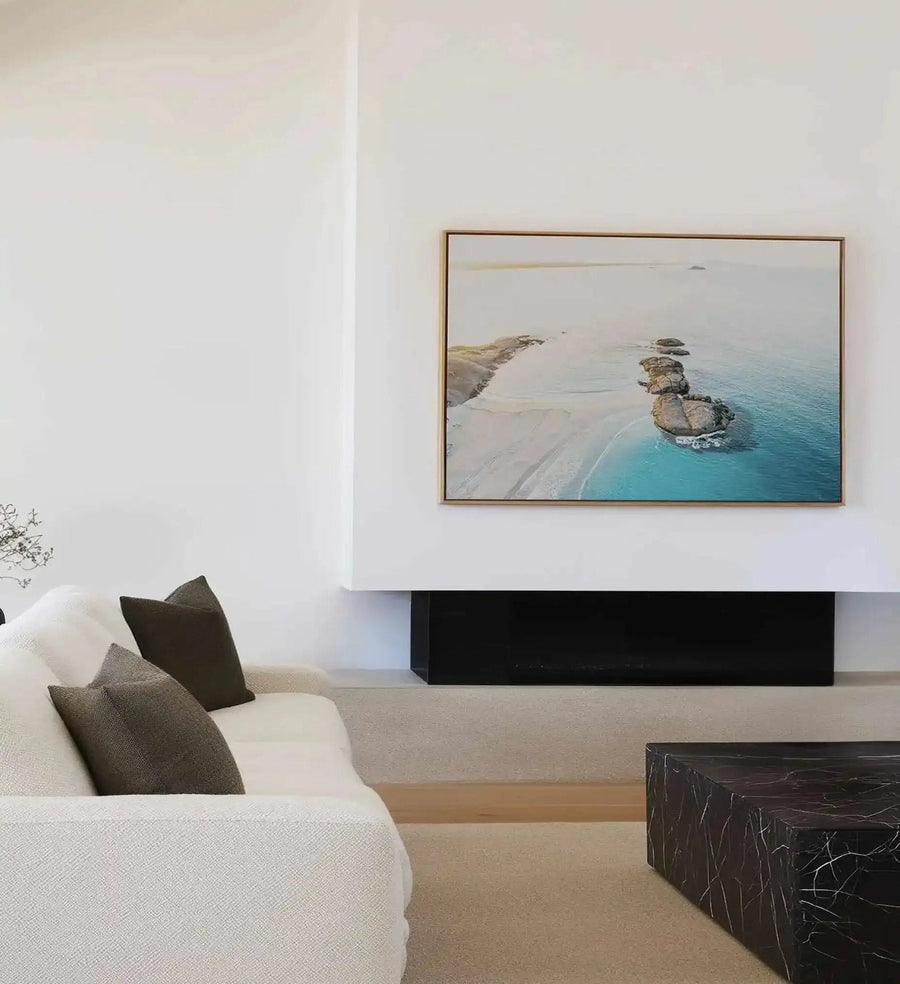
- Framed canvas prints suit painterly work and bold colour. The artwork is printed on canvas, stretched and set in a floating frame with a thin shadowline. See framed canvas prints.
- Wallpaper is the room-scale option for surface pattern designers, sold as a 70cm × 10m roll from one seamless repeat. The wallpaper dropshipping page explains the file requirements.
If you're torn between paper and canvas, the guide to choosing between framed paper and canvas covers the differences in detail. You don't need to offer everything. One or two formats done well beats six done vaguely.
Step two: get the files right once
A print on demand model lives or dies on the file. Once your production file is right, every future order is a repeat of a known result. Get it wrong and every order carries the same flaw.
The basics are straightforward: supply a TIFF, JPG, PNG or WebP up to 200 MB, aim for 300 ppi at the final print size, use sRGB with the profile embedded, and keep important detail away from the edges in case a size needs a small crop. The full walkthrough is in preparing your artwork file for fine art printing, and if you're working from a physical painting, start with how to photograph or scan your paintings.
One file can serve many sizes, but only if the proportions suit. A painting that is nearly square will not fit a 50 × 70 cm print without cropping or a border. The guide to standard sizes and aspect ratios shows which Print Punch sizes suit which proportions, and the product pages let you preview your file in each size before you order.
Step three: understand the costs before you set a price
When you don't hold stock, your cost per print is simply the production charge plus delivery. There's no bulk discount for printing fifty at once, but there's also no waste and no cash tied up.
The listed production charges are public. An A2 unframed print on 230gsm Fine Art Paper is $64.95. The same A2 framed in Oak veneer, White or Black is $119.95. An A2 framed canvas is $169.95. Larger sizes step up from there, and every price on the site is in Australian dollars including GST, with delivery calculated separately at checkout. Each product page carries a margin calculator: enter the price you plan to charge and it shows your gross profit before delivery and other costs.
The pricing guide for independent artists goes through the maths properly, including delivery, payment fees and the question of whether to charge shipping separately. The short version: set your own price from your own costs, not from what you hope the market thinks. Print Punch doesn't publish a recommended retail price, because that number is yours to decide.
Step four: choose where the order goes
Every Print Punch order can go to your own address or directly to your collector.
You can supply your sender details, packing slip preferences, optional branded insert, returns address and tracking contact with your order. We can ship directly to your customer under your brand. The white-label page spells out each rule.
If you sell through Shopify, the connect your Shopify store page describes the current manual pilot. There's no automatic connector today; approved order details are sent manually and tracking comes back to you to add to your order. The guide to selling prints on Shopify with Australian print on demand walks through the setup.
Step five: place one paid test order
You can order a sample of the product you plan to sell and have it sent to yourself. Check the colour against your original, the frame finish, packaging, packing slip and tracking. This is optional for white-label delivery.
A test order costs you one production charge. A collector receiving something you've never seen costs you a relationship. The pre-launch test order checklist lists exactly what to look at when the parcel arrives.
What production timing looks like
Print Punch's standard dispatch target is within 72 business hours after artwork approval. Peak periods and quality checks can extend that, and if there's a question about your file, production pauses until it's resolved. Rush production isn't guaranteed, so if a collector has a hard deadline, ask before you promise it. The service guide section of how it works publishes these working rules, and the post on turnaround, packing and shipping explains what happens between upload and delivery.
Delivery is calculated from the product size, weight and destination. Checkout is active for Australia and 31 international regions, so a collector in Melbourne or in another country can be served from the same product.
How to describe the product to your collectors
Collectors want to know what they're buying. Use the real specifications in your listing: the paper weight and surface, the frame finish, the acrylic face on framed paper, the floating frame and shadowline on canvas. The frames and materials page and its specifications section give you stock names, weights and frame dimensions you can quote directly.
Be honest about timing too. "Made to order in Australia, dispatched within three business days of file approval, delivery time depends on your location" is a sentence a collector can trust. Over-promising on speed is the fastest way to turn a happy buyer into a refund request.
Edition thinking
Selling without stock doesn't mean selling without limits. You can still run numbered limited editions, open editions or a mix. The difference is that you number and sign the certificate rather than the print itself when the print ships directly to the buyer, or you have the print sent to you first for signing. The guide to limited editions, open editions and certificates covers the options and what to tell collectors.
A simple plan for your first month
Week one: pick two formats and three artworks. Preview each artwork in two sizes on the product pages and note which sizes need a crop. Week two: place one paid test order of the format you expect to sell most and have it sent to you. Photograph it properly when it arrives, because that photo becomes your listing image. Week three: write your listings using the real specifications, set your prices with the margin calculator, and decide how delivery is charged. Week four: if you want collector delivery, supply the delivery address and your sender and packing preferences with your order. By the end of the month you have a tested product, honest copy and a workflow you've already run once. Everything after that is repetition, which is exactly what a print on demand model is good at.
Common mistakes to avoid
- Listing sizes you've never seen. Preview every size on the product page and test the one you expect to sell most.
- Ignoring aspect ratio. A painting that needs a heavy crop at one size shouldn't be offered at that size.
- Leaving out delivery details. Check the collector address and your sender and packing preferences.
- Copying a competitor's price. Your costs, margin and audience are different.
- Forgetting delivery. Decide whether you'll build it into the price or charge it separately before you launch.
- Skipping the test order. It's the cheapest insurance you'll ever buy. The print-on-demand for artists page summarises the service in one place if you want to send a collaborator or accountant somewhere short.
Frequently asked questions
Do I need to buy anything upfront to start selling prints?
No. There's no minimum order and no inventory. You pay the production charge when you place each order. Many artists place a single paid test order first so they know exactly what their collectors will receive.
Can Print Punch send prints directly to my customers?
Yes. We can ship directly to your customer under your brand.
How long does an order take?
The standard dispatch target is within 72 business hours after artwork approval, with published exceptions for peak periods, quality checks and file queries. Delivery time is added on top and depends on the destination.
Which format should I start with?
Unframed prints are the simplest and lowest cost. Framed paper and framed canvas arrive finished and sell for more. Most artists launch with one or two formats and add others once they know what their audience buys.
What file do I need?
A TIFF, JPG, PNG or WebP up to 200 MB, ideally 300 ppi at the final print size in sRGB with the profile embedded. The product page previews your file before you order.
Does Print Punch tell me what to charge?
No. The production charge is published and the margin calculator on each product page shows your gross profit at any selling price you enter. The selling price is yours.
Where to go next
Start by choosing your format on the print formats page, preview your artwork on the product page, and read the artist FAQs for anything we haven't covered. When you're ready, place that first paid order to yourself. The rest follows from there, one order at a time, with no stock in the spare room. If you'd rather talk it through first, tell us about your artwork and we'll reply the next business day.