ARTIST JOURNAL
Choosing a blank canvas with a floating frame

There is a particular pleasure in starting a painting on a canvas that is already framed. The edge is decided. The scale is real. You can see the finished object before the first mark, and when the last mark dries the work is ready to hand over. This guide is for painters considering a double-primed blank canvas supplied in a floating frame: what you're buying, how to choose a size and finish, how to paint around the frame, and how to get the finished piece to a buyer in the same box it arrived in.
What a float-framed blank canvas actually is
A blank canvas with a floating frame is a stretched, double-primed poly-cotton canvas sitting inside a timber frame with a small gap between the canvas edge and the frame. That gap, the shadowline, is deliberate. It makes the canvas appear to float, and it means the frame never touches the painted edge.
Print Punch supplies these ready to paint in 23 sizes, from A2 (42 × 59.4 cm) and 50 × 50 cm up to 120 × 180 cm, with Oak veneer, Australian Raw Oak, smooth White or smooth Black frames. The canvas arrives blank. There is no printing, no acrylic face and no artwork involved, which is why it has its own blank canvas product page rather than sitting with the printed products. The artist FAQs answer the short questions.
The product page offers an optional local planning preview: you can upload a reference image to see roughly how a composition might sit in the frame. Nothing is printed and the file isn't submitted. It's a planning tool for painters, nothing more.
Why painters choose a framed blank
- The frame is part of the composition from day one. You paint knowing exactly where the edge sits and how the finish will meet your colours.
- No framing step at the end. A finished painting that needs framing can sit for months. A float-framed canvas is complete when the paint is dry.
- Consistent presentation across a series. Ten canvases in the same finish and size read as a body of work.
- Easier to sell. Buyers understand a framed painting instantly. An unframed stretched canvas invites questions about what it will cost to finish.
- Cleaner edges. The shadowline hides minor edge imperfections that would show on a bare stretched canvas.
Choosing a size
The 23 sizes cover most studio needs. A few ways to think about it:
- Squares (50 × 50, 60 × 60, 70 × 70, 76 × 76, 80 × 80, 90 × 90, 100 × 100, 110 × 110, 120 × 120 cm) suit abstract work, portraits and anything you want to hang in a grid.
- Classic portrait and landscape ratios (50 × 70, 60 × 90, 70 × 100, 80 × 100, 100 × 130, 100 × 150, 120 × 150, 120 × 180 cm) suit landscapes, figurative work and statement pieces.
- A2 (42 × 59.4 cm) is a handy small format for studies and lower price points.
If you also sell prints of your paintings, choosing a blank canvas size that matches a Print Punch printed size makes life easier later. A 70 × 100 cm original can become a 70 × 100 cm framed canvas print or framed paper print without cropping. The standard sizes and aspect ratios guide lists the printed sizes.
Think about where the painting will hang, too. A 120 × 180 cm canvas is a statement that needs a wall to match, and delivery for the largest sizes costs more. Prices start at $109.95 for A2 and 50 × 50 cm in Oak veneer, White or Black and rise to $599.95 at 120 × 180 cm, in Australian dollars including GST before delivery. Australian Raw Oak starts at $149.95.
Choosing a frame finish
Four finishes, four different relationships with your paint.
Oak veneer shows visible grain with consistent colour and tone. It's warm without being loud and suits almost any palette. If you're building a series and want every frame to match, this is the dependable choice.
Australian Raw Oak is a natural timber finish. The four moulding lengths can vary noticeably in colour, tone and grain and are not expected to match exactly; that character is the point. It suits earthy palettes, textured work and painters who like a frame with a life of its own. It carries a premium over the other finishes. The Oak veneer versus Australian Raw Oak guide goes through the trade-offs.
Smooth White has no visible grain and lightens the edge. It flatters pale, airy work and lets colour do the talking.
Smooth Black sharpens the edge and adds definition. Dark palettes, high-contrast work and anything you want to read as crisp and contemporary sit well in black.
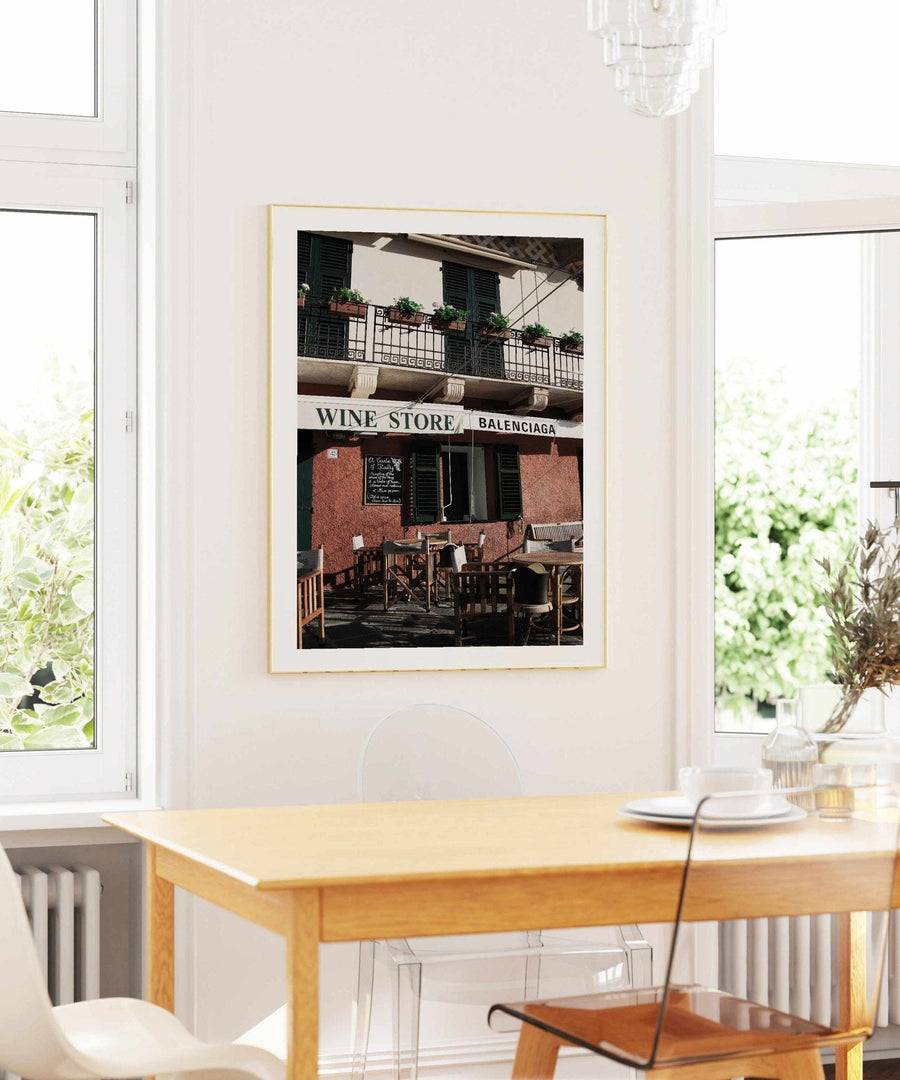
You can see each finish photographed on the frames and materials page, and the blank canvas product page shows the actual float gap and corner detail.
Painting on a framed canvas
A few practical habits make the difference between a clean finish and a frame you have to clean.
Mask the frame. Run low-tack painter's tape along the inner edge of the frame before you start. Acrylic and oil both find their way into a shadowline faster than you'd expect. Remove the tape while the final layer is still slightly tacky so it doesn't lift dried paint.
Decide about the edges. With a floating frame, the canvas sides are visible through the shadowline. Painting the sides in a neutral colour or continuing the composition around them looks finished. Leaving them raw white is a choice too, but make it on purpose.
Mind your mediums. Solvents and heavy varnish can mark a timber finish. Keep rags and brushes clear of the frame face and wipe any splash immediately.
Let it cure properly. Oil paint can take weeks to be touch-dry and longer to cure. Don't box a painting until it's safe to wrap, and never let packaging material rest on a tacky surface.
Varnish before boxing. If you varnish, do it before the painting goes anywhere near the box, and allow full drying time. The refund and care guidance covers how finished artworks are handled; your own care in the studio decides how the painting arrives.
Reusing the packaging
Your blank canvas arrives packed for transit. Keep that packaging. When the painting is finished, cured and dry, you can reuse the same box and protective materials to send the artwork to your buyer, provided everything remains clean, dry and undamaged. Remove old shipping labels, replace any protective layer that has been crushed or torn, and check the carrier's requirements for the size you're sending. It's one less thing to source and one less cost in your price.
Pricing a painting on a framed canvas
The production cost of the blank canvas is one input to your price, not the whole story. Your time, your materials, your reputation and the size of the work all matter more. But knowing the canvas cost precisely helps you price with confidence, especially when a buyer asks why a framed original costs what it does. The pricing guide is written for prints, but the same logic of knowing your inputs applies to originals.
Many painters also sell prints of the finished original. That's where the rest of the Print Punch range comes in: photograph the painting well (the guide to photographing paintings for prints explains how), then offer it as a framed canvas print or framed paper print alongside the original. The guide to selling prints without holding stock covers that model.
Blank canvas versus printed canvas
People sometimes confuse the two, so to be clear: a blank canvas is for painting an original. A printed canvas reproduces an artwork file on canvas. Both use a floating frame, both come in the same finishes, but they are different products with different purposes. If you want your painting reproduced, use the framed canvas print product. If you want to paint, you're in the right place. The paper versus canvas guide covers the printed options.
Ordering more than one
Painters working on a series often order several canvases at once. Each size and finish is a separate line in the cart, and delivery is calculated on the whole order. Larger quantities or sizes outside the 23 listed can be discussed through the contact page; custom sizes are quoted individually.
Scale in the room
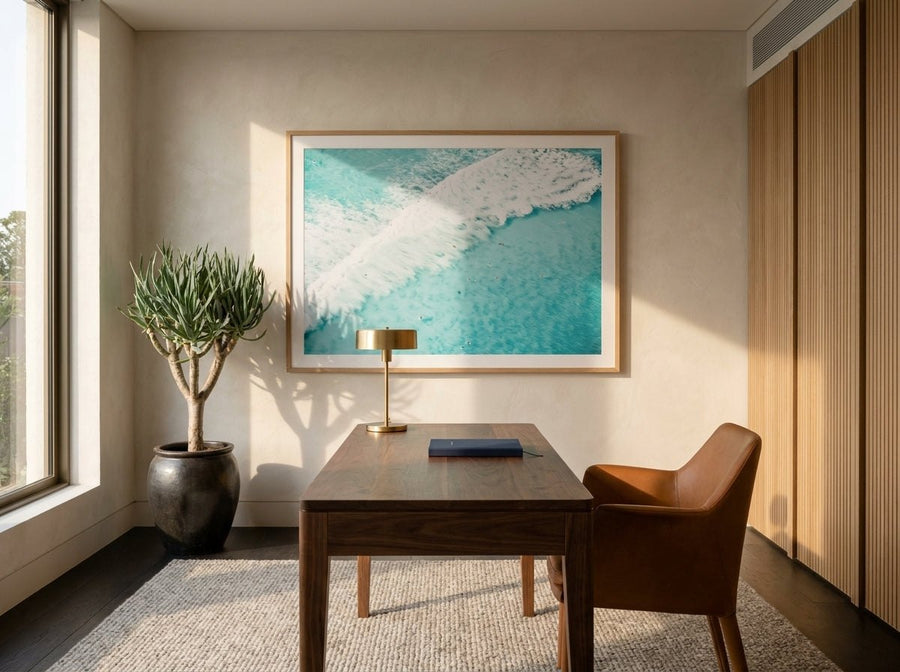
Painters tend to choose canvas sizes by what fits the studio easel rather than what fits a wall, and the two are not the same. A 60 × 90 cm canvas feels substantial on an easel and modest above a three-seat sofa. A 100 × 150 cm canvas is awkward in a small studio and exactly right in a living room with a high ceiling. If you sell to interior buyers, it helps to know the common wall sizes: above a sofa, 100 to 150 cm wide works; above a queen bed, 120 to 150 cm; in a hallway or entry, 60 to 90 cm. The planning preview on the product page is one way to sanity check proportions before you commit, and a strip of masking tape on your own wall at the real dimensions is another.
Scale also affects price in two places: the canvas cost and the delivery charge. Large framed canvases ship as bulky freight and the delivery calculated at checkout reflects that. If you expect to send finished paintings interstate, check the delivery estimate for the blank canvas first, because the finished painting in the same box will cost roughly the same to send.
Handing over the finished work
When a collector buys a float-framed painting, they expect to hang it and be done. Make that easy. Add hanging hardware suited to the weight before you wrap it, note the frame depth in your description so they can plan the fixing, and include a short care note: keep it out of direct sun, dust with a dry cloth, avoid cleaning sprays near the frame face. If you've painted the canvas sides, say so; collectors enjoy knowing the edges were considered. These small touches are the difference between a painting that is simply delivered and one that feels finished in the buyer's hands.
Framed canvas and framed paper as an alternative
Some painters prefer to paint on their own stretched canvas and frame later, or to paint on panel. Both are valid, and if that's your practice, Print Punch's framed blank is simply one more option rather than a replacement. Where it earns its place is in speed to sale and consistency across a series. If you're preparing for an exhibition, a market season or a collection launch and need eight finished, matching works in six weeks, having the frame already around the canvas removes a whole step at the end, when time is tightest.
For painters who also sell reproductions, the printed products complete the picture. A finished original on a 70 × 100 cm framed blank, photographed well, becomes a framed paper print at 70 × 100 cm or an unframed fine art print for collectors who can't stretch to the original. The print formats page lists every option side by side, and the how it works page explains the production path for each.
Frequently asked questions
Is the blank canvas primed?
Yes. It is double-primed poly-cotton canvas, ready for acrylic or oil without further preparation. Some painters add their own ground for a specific surface, but it isn't required.
Does the blank canvas come with any printing?
No. The blank canvas is for painting originals. It arrives blank in your chosen floating frame. Printed canvas is a separate product.
Can I reuse the box to send my finished painting?
Yes, as long as the packaging is clean, dry and undamaged. Remove old labels, replace any damaged protection and make sure the painting is fully dry before wrapping.
Which frame finish is best for a series?
Oak veneer, smooth White or smooth Black give consistent results across multiple canvases. Australian Raw Oak varies by nature between lengths and between frames, which suits some series and not others.
How much does a framed blank canvas cost?
From $109.95 for A2 or 50 × 50 cm in Oak veneer, White or Black, up to $599.95 at 120 × 180 cm. Australian Raw Oak starts at $149.95. Prices are in Australian dollars including GST and delivery is calculated at checkout.
Can I order a size that isn't listed?
Yes, by quote. Use the contact page with the dimensions and finish you need and our team will confirm what's possible.
Start with the frame
Choose your size and finish on the blank canvas product page, try the planning preview if it helps, and order the canvas that matches the painting in your head. When the work is finished and you want prints of it, the print formats page is the next stop.