ARTIST JOURNAL
A wedding photographer's guide to offering framed prints to clients

Most wedding photographers deliver a gallery, send an invoice, and watch the images live on a phone forever. The couple loved them. Nobody printed them. Offering framed prints changes that, and it changes your income too, because a framed wall piece is the part of the job a couple will look at every day for thirty years. This guide is for wedding and portrait photographers who want to add framed prints to their offer without stocking frames, losing weekends to packing, or guessing at paper. It covers paper and finish choices for portraits, the sizes couples actually hang, pricing, delivery direct to the client, and the timeline that makes it all feel calm.
Why framed, not just prints
A loose print is a task the couple still has to finish: find a frame, get it cut, hang it. Most never do. A framed print arrives as a finished object they can hang that afternoon. It also protects the image (Print Punch framed paper prints sit behind a clear acrylic face, no glass to crack in a courier van) and it carries a higher price with a better margin than a bare print. The framed paper prints product is the one most photographers start with.
Choosing paper for portraits
Print Punch offers three fine art papers. For wedding and portrait work:
230gsm Premium Matte Fine Art Paper is the safe, flattering default. Skin tones stay natural, whites in a dress hold texture without glare, and detail in lace and rings stays crisp. Matte behind acrylic reads as a quiet, editorial finish.
240gsm Textured Cotton Rag Paper suits black and white, film-style edits and softer, romantic work. The texture gives portraits a painterly feel. It's available up to 100 × 130 cm.
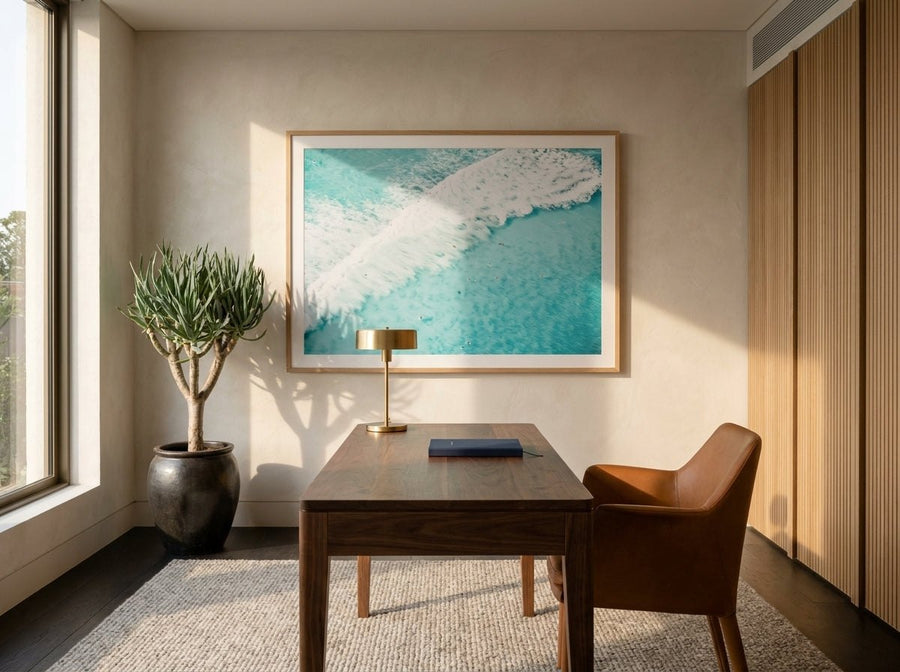
260gsm Metallic Pearl Paper is less common for portraits but suits golden-hour, beach and water images where light and sparkle are the point. If you shoot coastal weddings, test it on a sunset frame.
The fine art paper guide goes deeper, and the paper versus canvas guide covers framed canvas, which some couples prefer for a large, texture-rich statement piece.
Choosing a frame finish
Oak veneer suits almost every wedding palette and matches across a set of three or five frames. White lightens airy, bright images. Black adds definition for moody or black and white work. Australian Raw Oak offers natural variation for couples who love timber and rustic venues; describe the variation honestly because the four lengths of each frame aren't expected to match exactly. The frame finish guide explains each option and the frames and materials page shows them.
Sizes couples actually hang
In our experience three sizes cover most wedding wall art:
- 50 × 70 cm or 60 × 90 cm above a hallway console, in a bedroom or as part of a set. 60 × 90 matches the 2:3 camera ratio exactly, so no crop.
- 70 × 100 cm above a sofa or bedhead in most apartments and homes.
- 100 × 130 cm as the statement piece in a living room with a generous wall.
Offer a set option too: three 50 × 70 prints in matching Oak veneer frames, for example, is a popular "ceremony, portrait, detail" trio. The standard sizes guide lists every size with its ratio so you know which crops to expect, and a 5cm white border makes 50 × 70 and 70 × 100 fit a 2:3 frame almost perfectly, as the border guide explains.
Files: your edited export is the production file
You already have what you need. Export the chosen image at full resolution as a high quality JPG or TIFF in sRGB with the profile embedded, no watermark, no border added in software, and upload it on the product page. Aim for 300 ppi at the print size: a 60 × 90 cm print at 300 ppi wants about 7100 × 10600 pixels, so a 24 to 45 megapixel camera file prints well at 200 to 300 ppi. Keep faces and hands away from the outer 1 to 2 cm. The file preparation guide has the full checklist, and the colour guide explains why you should judge the first print in daylight rather than against a bright monitor.
Pricing framed prints for clients
Your cost is the production charge plus delivery. A 60 × 90 cm framed paper print on matte stock in Oak veneer, White or Black is $159.95; a 70 × 100 is $179.95; a 100 × 130 is $259.95, all Australian dollars including GST before delivery. Photographers typically price framed wall art at two to three times production, which reflects the image's value and your time curating and preparing it. A 70 × 100 at $449.95 leaves roughly $270 gross before delivery and payment fees, and the margin calculator on the product page shows the figure for any price you enter. The pricing guide covers the full method, including building delivery into the price or charging it separately.
Packages work well: include one framed print in your top wedding collection and offer upgrades to larger sizes or sets. The framed piece becomes a reason to book the higher package.
Delivering direct to the couple
With white-label fulfilment, the framed print ships from Print Punch to the couple with your approved sender name, your packing slip rule and, if you like, a card from you as an approved insert. The couple receives the piece as yours. Supply your sender and packing preferences with your order. You can order a sample to check the product and colour. The white-label dropshipping guide explains the profile and the white-label page sets out the rules. We can ship directly to your customer under your brand.
The timeline after the wedding
A calm sequence most photographers settle into:
- Gallery delivery. Include a short "wall art" section with three or four images you recommend framing, and the sizes you suggest.
- Consultation. A fifteen-minute call or a simple order form where the couple chooses images, sizes and finish.
- Order. You place the production order with the export file, the couple's address and your order reference, under your fulfilment profile.
- Production. Print Punch's standard dispatch target is within 72 business hours after artwork approval, with exceptions for peak periods, quality checks and file queries. The service guide publishes this.
- Delivery and follow-up. Tracking comes to you; you pass it on. A week later, ask for a photo of the print on their wall. That photo becomes your next booking's proof.
Tell couples the realistic total: production plus delivery time to their location. Don't promise a date for an anniversary or housewarming without asking us to confirm first; rush production isn't guaranteed.
Quality control and the first order
Before offering framed prints to a single client, order one for yourself in the size and paper you'll recommend most. Check skin tones in daylight against your calibrated screen, check the frame finish and the acrylic, check the packaging. Photograph it on your own wall for your website. The test order checklist lists what to inspect, and the how it works page explains the order path.
Albums, prints and frames together
Framed wall art sits alongside albums and loose prints, not instead of them. The framed piece is the one the couple's visitors see; the album is the one they open on anniversaries. Position the framed print as the "every day" piece and you'll find couples choose both. For loose prints they'll frame locally, the unframed fine art print on matte or cotton rag paper with a 5cm border gives them a fine art print a framer can work with.
What to put in your client guide
- Which three or four images you'd frame, and why.
- The sizes and where they'd hang, with a note on wall widths.
- The paper and frame finish you recommend, in plain words.
- Realistic timing: made to order in Australia, dispatched within about three business days of approval, plus delivery.
- A care line: hang out of direct sun, dust the frame with a dry cloth, no sprays near the acrylic.
- Your price list with the margin you've decided on.
Selling framed prints without the admin
The reason photographers abandon print sales is admin: sourcing frames, waiting on a framer, packing, driving to the post office, chasing a courier. With made-to-order production and white-label delivery, the admin shrinks to placing the production order and forwarding tracking. One framed print order takes about ten minutes of your time once your fulfilment profile is set. That changes the maths of offering wall art: a product that once needed a weekend now needs a coffee break, and the guide to selling without stock explains the model in full.
If you shoot many weddings a year, set up the fulfilment profile once, test once, and build a simple order form your couples fill in with image numbers, sizes and finish. The form becomes the brief for each production order.
Engagement sessions, families and newborns
The same approach works for every portrait genre. Engagement sessions produce the pieces couples hang before the wedding; family and newborn sessions produce the pieces grandparents buy. Newborn and family work often suits textured cotton rag with a border and a White or Oak veneer frame, which reads soft and domestic. Commercial portrait clients sometimes want framed canvas for an office wall; the paper versus canvas guide covers that choice. Offer the same three sizes across genres so your pricing stays simple, and preview each image at the size before you quote it, using the sizes and ratios guide if a crop surprises you.
Editions and the single-client print
Most wedding prints are one-offs for one couple, so edition numbering doesn't apply, but a signed certificate still does. A card with the image title (or the couple's names and the date), the paper stock, the frame finish, the printing method and your signature turns a print into an heirloom and costs you a minute. Include it as an approved insert under your fulfilment profile or send it separately. The editions and certificates guide covers what to include, and the giclée and archival printing guide explains what you can honestly say about longevity when a couple asks whether it will last.
A note on colour for skin
Skin tones are where photographers judge a print hardest, and matte fine art paper reproduces them faithfully as long as the file was edited on a screen at sensible brightness. Judge your first framed print in indirect daylight, not under a warm lamp, and compare to your calibrated monitor rather than your phone. If the print runs slightly warm or cool overall, adjust the master file and lock it; every future client print will follow. The colour management guide explains the screen and paper difference in detail. The framed prints for artists and photographers page is the one to bookmark when a couple asks what they are buying.
Frequently asked questions
Which paper is best for wedding portraits?
230gsm Premium Matte Fine Art Paper for natural skin tones and crisp detail. 240gsm Textured Cotton Rag for black and white or film-style work. Metallic Pearl for golden-hour and water images.
What size framed print do couples usually choose?
60 × 90 or 70 × 100 cm for most living rooms and bedrooms, with 100 × 130 cm as a statement piece and sets of 50 × 70 cm for hallways.
Can the framed print ship directly to my couple?
Yes. We can ship directly to your customer under your brand.
Do I need to resize my export?
No. Upload your full-resolution edited export in sRGB. The product page previews it at the chosen size and the file attaches to the order.
How long does it take?
Standard dispatch is within 72 business hours after artwork approval, then delivery time to the couple's address. Peak periods and file queries can extend it, so confirm before promising a date.
Is glass used in the frames?
No. Framed paper prints use a clear acrylic face, which is lighter and safer in transit than glass.
Add framed prints to your next collection
Open the framed paper prints page, upload a favourite portrait and preview it at 60 × 90 in Oak veneer. Then order one for your own wall. For help with delivery to couples, use the contact page and the artist FAQs cover the smaller questions.