ARTIST JOURNAL
White border or edge to edge: finishing decisions for fine art prints

A border is a quiet decision with loud consequences. It changes how a print sits in its frame, how the eye enters the image, whether a signature has somewhere to live, and even whether a particular artwork can be offered at a particular size. Print Punch paper prints offer two choices: an even 5cm unprinted white border, or printing edge to edge. This guide explains what each does, when to choose which, how the border interacts with the frame and the acrylic face, and the one thing a border is not.
What the border is, and what it isn't
On Print Punch's unframed fine art prints and framed paper prints you can choose an even 5cm unprinted white border around the artwork. It is exactly that: an unprinted area of the same fine art paper, equal on all four sides. The artwork is scaled to fit inside it, and it's centre-cropped only when needed to keep the border even.
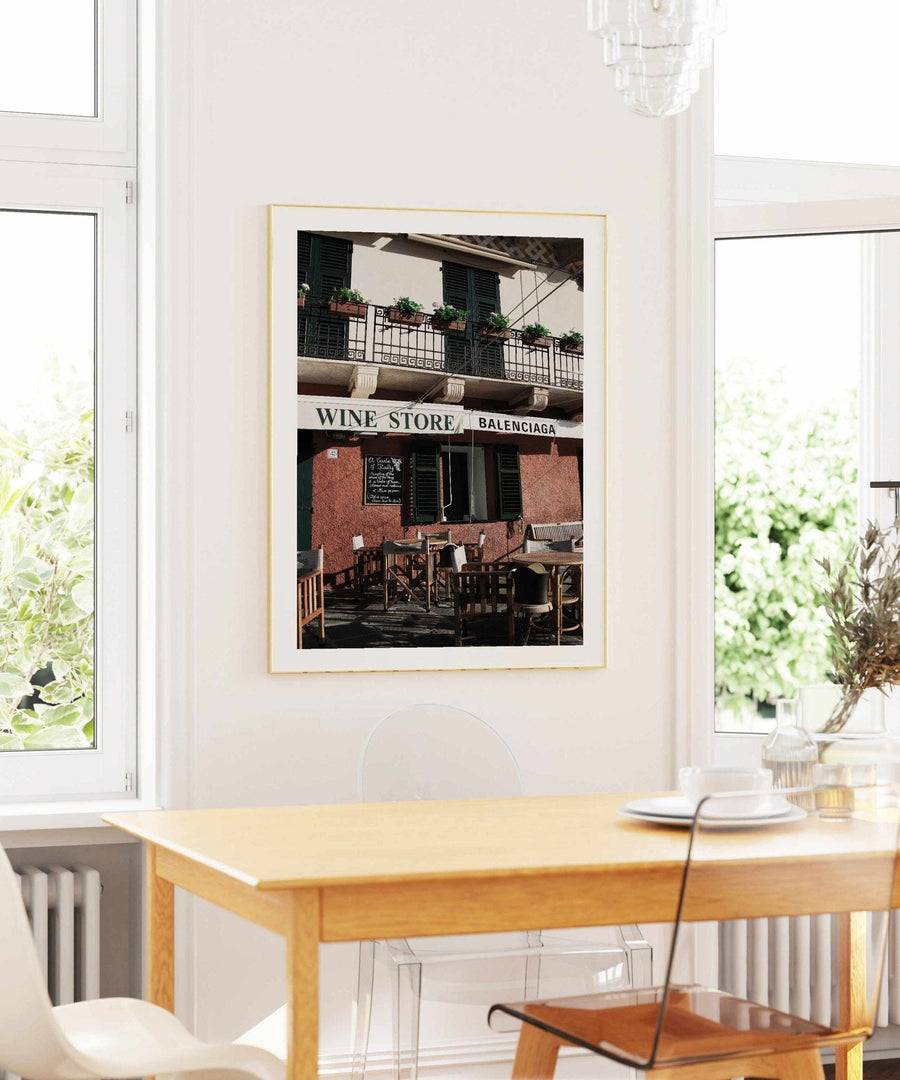
It is not a mat. There's no separate mat board, no bevel-cut window, no second layer. On a framed print the paper sits behind the clear acrylic face and the border is simply the paper showing around the image. Say this clearly in your listing; the artist FAQs say it too, because "white border" and "mat" are often confused and a collector expecting a mat will be disappointed by paper.
Canvas has no border option. Printed canvas runs to the canvas edge inside a floating frame, and the shadowline does the job of giving the image room. The paper versus canvas guide covers that difference.
Why a border helps
It gives the image air. A margin of paper between the artwork and the frame edge lets the composition settle. Busy or detailed work often reads better with a border, because the eye has a place to rest before entering the image.
It fixes proportion mismatches. Every listed size has a fixed proportion, and your artwork rarely matches exactly. With a border, the image scales to fit inside the printable area and any small difference is absorbed into slightly unequal white space on two sides rather than a crop. The standard sizes and aspect ratios guide lists each size's ratio so you can see how much mismatch you're dealing with.
It makes space for a signature or title. Artists who sign prints by hand usually sign in the lower border. If you sell unframed prints and sign them yourself before passing them on, the border is where that happens.
It reads as a fine art print. Collectors associate a white margin with gallery prints, editions and drawings. For watercolour, pencil, charcoal and illustration it feels right.
It protects the image edge. On an unframed print that a collector will frame locally, a border gives the framer something to hold and hide under a rebate without touching the image.
Why edge to edge is sometimes stronger
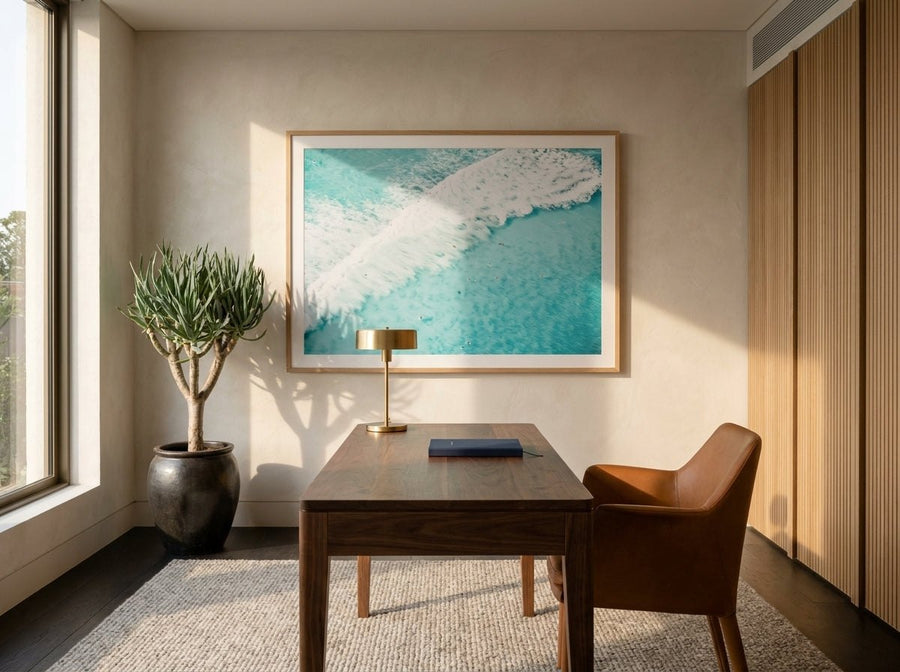
Photography with scale. Landscapes, aerials and seascapes often want to fill the frame. A border can make a wide view feel smaller and more contained; edge to edge keeps the horizon running to the frame and the scene feeling expansive.
Bold colour and abstract work. A field of saturated colour that stops 5 cm short of the frame can look like a sticker. Running it to the edge lets the frame do the containing.
A contemporary, uninterrupted finish. Edge to edge behind acrylic reads as sleek and modern. Combined with a Black or White frame it suits interiors that lean minimal.
Maximum image size for the money. At a given print size, edge to edge gives you the largest image area. If the artwork's proportion already matches the size, there's no reason to shrink it.
How much image do you lose to a border?
On a 50 × 70 cm print, a 5cm border on all sides leaves a 40 × 60 cm printable area; the image fills that area and the proportion of the printable area is 2:3 rather than 5:7. On A2 (42 × 59.4 cm) the printable area is 32 × 49.4 cm. On 100 × 130 cm it's 90 × 120 cm. Because the border is a fixed 5 cm, it takes a larger share of a small print than a large one. At A2 the border is a prominent feature; at 120 × 150 cm it's a modest margin.
That proportion shift is often helpful. Many artworks are closer to 2:3 than 5:7, so a bordered 50 × 70 may fit your image with less cropping than an edge to edge 50 × 70 would.
Border and the acrylic face
On a framed paper print the clear acrylic face sits in front of the paper. With a border, the white paper margin is visible behind the acrylic between the image and the frame, and it catches light softly. Under direct light the border can show a slight sheen from the acrylic just as the image does; that's normal and part of the finished look. With edge to edge the image meets the frame rebate directly, and a millimetre or two of the image edge sits under the frame lip, which is why the file preparation guide asks you to keep important detail 1 to 2 cm inside the edge.
Border and frame finish
White frames with a white border create a soft, continuous light edge that suits pale work. Black frames with a white border make the image pop as a distinct object inside two contrasting rings. Oak veneer with a border gives the classic gallery look. Edge to edge with Oak veneer or Australian Raw Oak lets the timber meet the image directly, which suits earthy and natural work. The frame finish guide covers each finish in detail, and the frames and materials page shows them.
Border and paper stock
Textured cotton rag with a border shows off the paper itself; the unprinted margin lets the texture read, and it suits watercolour and drawing reproductions. Matte with a border is clean and classic. Metallic pearl with a border frames the sheen with calm white; edge to edge on pearl lets the glow run to the frame. The fine art paper guide explains each surface.
Signatures, titles and edition numbers
If you plan to sign prints by hand, choose the border and have prints sent to you first rather than directly to collectors, so you can sign before they're framed or passed on. If prints ship directly to collectors under white-label fulfilment, sign and number a certificate instead and include it as an approved insert, as the limited editions and certificates guide explains. A printed signature inside the image area works for both paths but should sit well inside the safe edge.
Previewing the choice
The product page preview shows your artwork with and without the border at each size. Toggle between them and look at the edges and corners. With the border, check that the image proportion sits comfortably inside the white; with edge to edge, check that nothing important falls in the outer centimetre. If the artwork needs a heavy crop either way, consider a different size or request a custom size from the quote form on the product page.
Offering both to collectors
Some artists offer the border as a selectable option in their own store; others pick one finish per artwork and keep things simple. If you offer both, describe them in plain words: "Even 5cm unprinted white border around the artwork (not a mat), or printed edge to edge." Keep the price the same for both; the production charge doesn't change with the border choice.
Borders by art form
Photography. Landscapes, aerials and seascapes usually want edge to edge for scale. Portraits, still life and documentary images often benefit from a border, which frames the subject and gives the eye a place to settle. Black and white photography with a border on matte paper is a classic, gallery-style presentation. The wedding photographer's guide covers client work specifically.
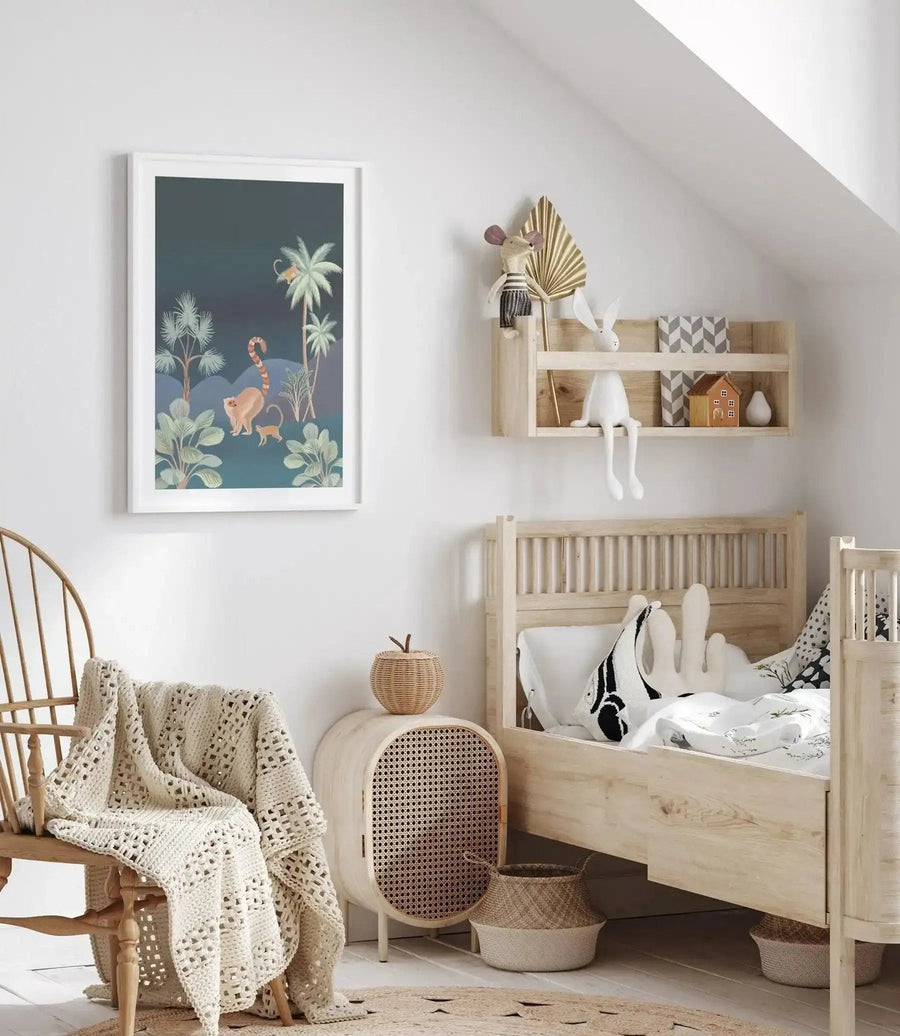
Illustration. Nearly always bordered. The white margin is part of how illustration is traditionally presented, and it absorbs the proportion mismatch between screen-sized canvases and paper sizes. The illustrator's guide goes further.
Painting reproductions. Either. A border makes a reproduction read as a print of a painting, honest and considered. Edge to edge makes it read more like the painting itself, especially when the frame is Oak veneer or Australian Raw Oak. If you also offer a framed canvas version, the paper print with a border gives collectors a clearly different object to choose between.
Watercolour and drawing. Bordered, on textured cotton rag if the work suits it. The paper becomes part of the presentation.
Graphic and typographic work. Depends on whether the design was made for the paper's proportion. If it was, edge to edge; if not, a border.
Border, proportion and the custom size question
A border changes the proportion of the image area, and sometimes that's the whole solution. A 3:4 painting on a 50 × 70 cm sheet with a 5cm border has a 40 × 60 cm image area at 2:3, which is a closer fit than the 5:7 sheet. Run the arithmetic for your artwork against each size using the standard sizes guide before assuming you need a custom size. Custom sizes are available by quote from the product page, but a standard size with a border is often cheaper, faster and just as right. The file preparation guide covers keeping important detail inside the safe edge for both choices.
What to write in your listing
Collectors don't know what "bordered" means until you tell them. A line that works: "Printed with an even 5cm unprinted white border on the same fine art paper (not a mat), which gives the artwork breathing room inside the frame." Or, for edge to edge: "Printed to the edge of the paper, so the image meets the frame directly." Both sentences prevent a mismatch between expectation and parcel, and both are short enough to sit under the price. The how it works page explains the review step where crop and border choices are checked before production.
If you still can't decide
Order the artwork both ways at the smallest size, on the paper you'll offer, and put them side by side on a wall for a week. The decision usually makes itself by the third day, and the two prints become your listing photographs for whichever option you choose. Two A2 unframed prints cost less than one wrong framed order, and you'll have learned something about your work that no preview can show you. The test order checklist covers what to look at when they arrive. The unframed printing page summarises sizes, papers and border options for collectors who frame their own prints.
Frequently asked questions
Is the white border a mat?
No. It's an even 5cm unprinted area of the same fine art paper around the artwork. There's no separate mat board.
Does the border cost extra?
No. The production charge is the same with or without the border.
Can I get a border on canvas prints?
No. Canvas prints run to the canvas edge inside a floating frame. The border is available on paper prints only.
How big is the image with a border on a 50 × 70 cm print?
The printable area inside a 5cm border is 40 × 60 cm. The artwork is scaled to fit that area and centre-cropped only if needed to keep the border even.
Which is better for photography, border or edge to edge?
Edge to edge usually suits landscapes, aerials and seascapes that want scale. A border suits portraits, still life and images with a clear subject that benefits from breathing room.
Can I sign my prints in the border?
Yes, if the prints are sent to you first. For prints shipped directly to collectors, sign a certificate and include it as an approved insert instead.
Decide with the preview
Upload your artwork on the framed paper prints page or unframed fine art prints page, toggle the border at the size you'll sell most, and look hard at the corners. For a second opinion on a specific composition, send it through the contact page.